

A conversation with Bridgette Hyun, founder of C Market Coffee, on building destination cafés, training the next generation of baristas, and her favourite café
Original article on The Coffee Dispatch
If you’ve visited Paris in the last six months, you’ll notice a pattern among the new wave of Asian-influenced cafés: they’re small, seating is scarce, and when you do find a chair you’re sitting close enough to your neighbour to hear their conversation. Yet the coffee is very good, so people queue anyway.
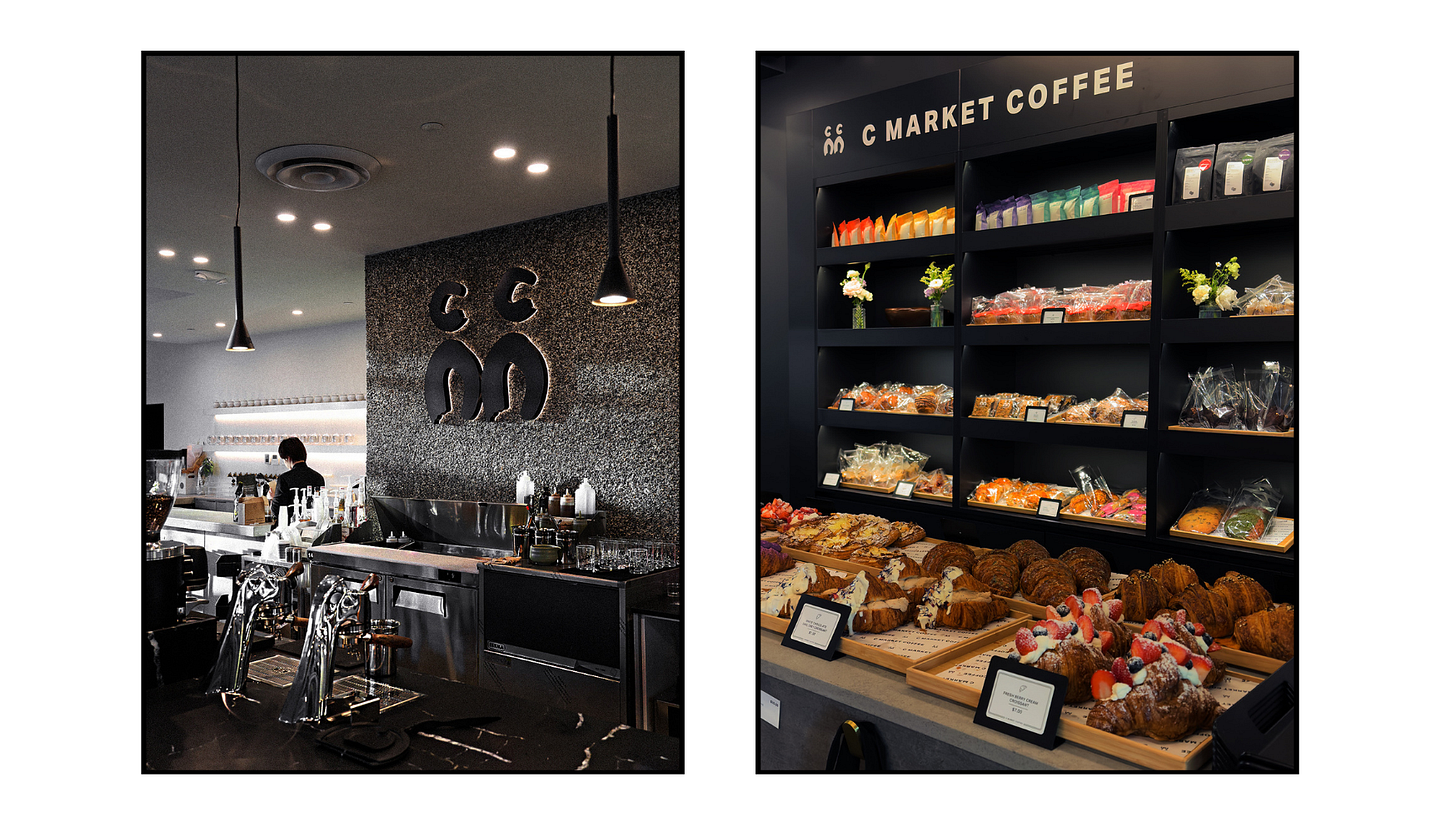
So when I came across C Market Coffee in the local Vancouver press and saw a Korean-influenced café doing the exact opposite; massive spaces, generous seating, room to spread out, I was curious enough to chase down an interview.
After a few false starts around Bridgette’s schedule, we finally got on a call, and I got to hear the story behind C Market: her path from a single Q-grader’s passion project to a four-location company, and why she keeps building bigger rooms while the rest of the specialty coffee world builds smaller ones.
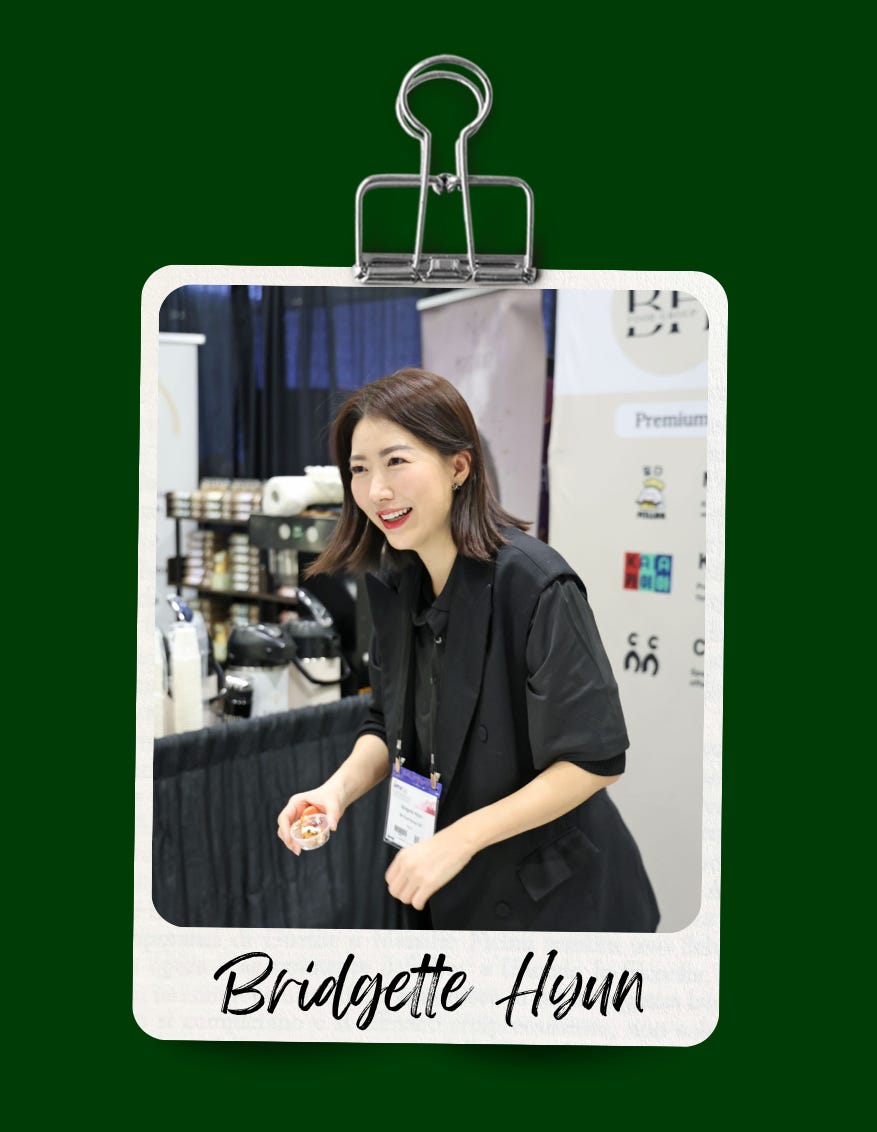
C Market takes its name from the global Arabica commodity exchange, the system that ultimately sets the price of coffee at its most basic level. For Bridgette, that’s the point: no matter how polished the café or how creative the menu, everything is built on the quality of the raw ingredient.
“I’ve always believed that no matter how beautiful a café is, or how creative the menu becomes, everything is built on the quality of the raw ingredients,” she told me. “It starts from the source.” Naming the brand after the exchange was a way of building that philosophy in from the foundation up.
As the brand has grown, the letter has taken on a second meaning. The “C” now stands for four pillars; Coffee, Culture, Connection, and Community, and “Market” points to the exchange of ideas and people the space is meant to hold. It’s also where the company’s slogan comes from: where every sip sparks connection.
The Kind of Space Few Dare to Build
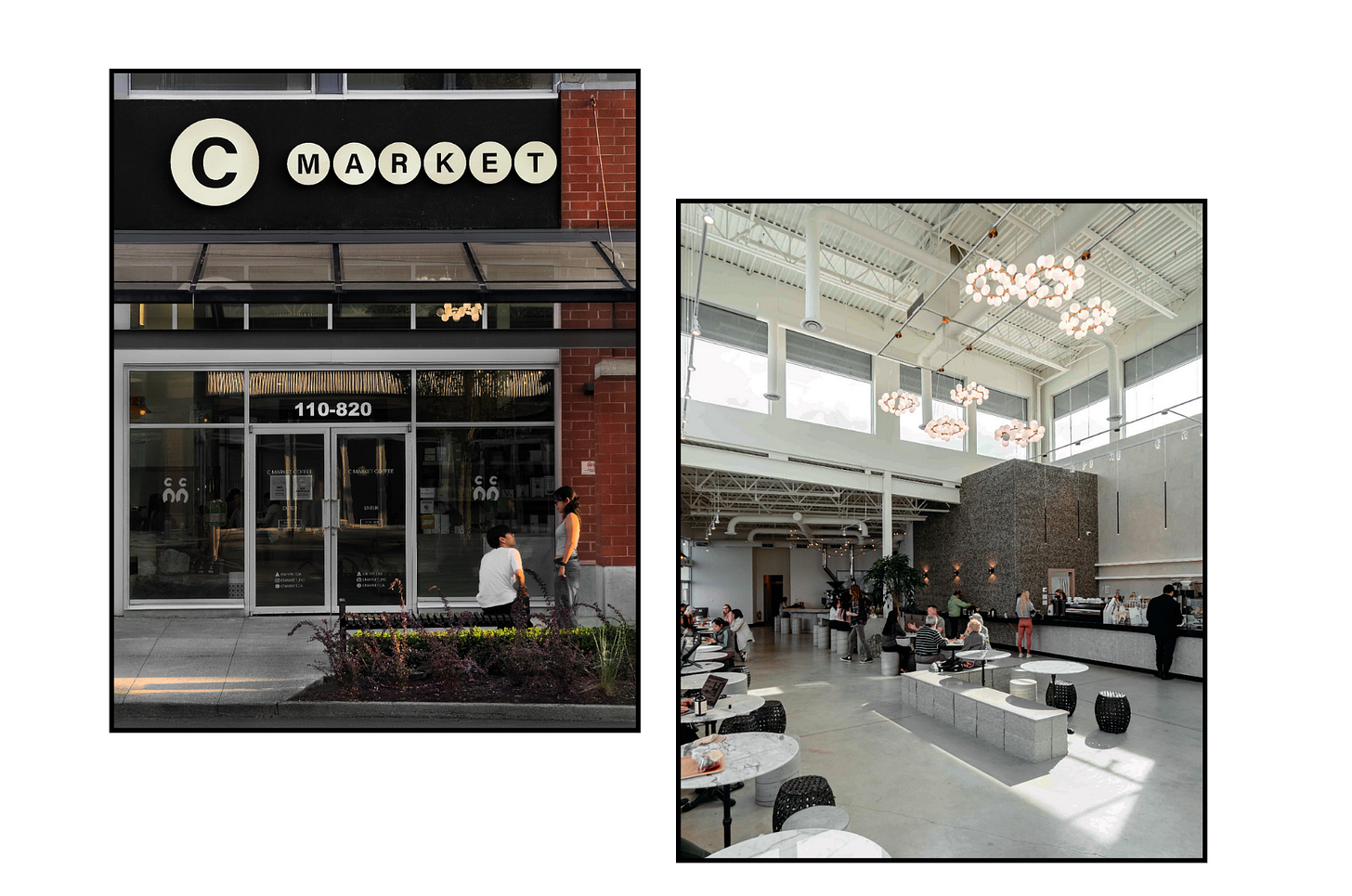
“We cannot really compare the value of having a small location with more traffic. We want to make more money, that’s correct, but my vision is more of a destination café.”
She’s tracked where customers travel from, and some come from two or three hours away — North Vancouver, West Vancouver — just for coffee, company, and a place to sit. “Sometimes it’s not just for coffee,” she said. “It’s the aesthetic, the culture, trying out a different space. To me, that’s fourth wave coffee.” Third wave, in her framing, was about obsessing over the ingredient itself; fourth wave is what you build around it.
That belief comes from her own frustration as a customer. She got tired of hunting for somewhere a group could gather without feeling like they were in the way, no pressure to leave, no one policing laptops, room for a stroller, a work session, or ten people catching up at once. “I wanted to offer a place where there is no limitation in terms of space or who can visit, whether they’re a coffee drinker or a tea person.”
There’s a cost to that generosity, and she’s clear-eyed about it: “It would definitely hurt when we’re not doing well.” But she trusts that people who value the space come back, and once they do, they start comparing every other coffee they drink to hers.
“It’s kind of a secret layer. When they visit another coffee shop, instantly they’ll compare it to their previous experience. I want to win that game.”
That same “no limitation” philosophy extends to who the space is built for. Bridgette wants young moms with strollers, seniors reading the newspaper, students working for hours, and friends just catching up, all in the room at once.
“To have that diverse clientele, we need to play with different chairs, and they need to understand they’re not feeling rushed.” With rent and the cost of living climbing in Vancouver, a café visit can start to feel like an unnecessary luxury, so she wants the visit itself, not just the drink, to feel worth the price.
“We wanted to give them more aesthetic vibes, other experimental interior design, so they feel like they can enjoy something more casual, like a hotel lounge, still in a coffee shop.”
What Makes C Market’s Coffee Quality Different
C Market has, from day one, sourced only specialty-grade green coffee scoring 80 points or above. Bridgette is a Q-grader, trained to formally assess and distinguish coffee quality, and her team holds Authorized SCA Trainer certifications through the Specialty Coffee Association. But she’s wary of what used to be called “coffee snob” culture, the kind that makes quality feel exclusive rather than shared.
“Ingredients are the fundamental thing to make any product. But that’s just the baseline for all coffee shops,” she said.
Her focus these days is less on proving expertise and more on building the brand around it, a serious bakery program made in-house rather than from frozen product, better pastry, a wider culinary identity without letting any one piece overshadow the others.
“Sometimes when you’re juggling a couple of things together, one gets hidden by the others. It depends on how we choose to showcase what we’re good at.”
She’s also watching the industry shift toward matcha, personal wellness, and craft-cocktail-style experimentation. She’d recently read that craft breweries are losing sales as drinkers move toward cocktails, and she sees the same instinct arriving in coffee. Blending, to her, is its own craft rather than a dilution of “real” coffee.
She described discovering the pairing of pepper with coffee on her travels, and the growing overlap between the cocktail world and specialty drinks. Her own signature, a black lava salt cream coffee she created in C Market’s first year, was built on exactly that instinct: an Americano, lightly sweetened cream, and a dusting of Hawaiian black lava salt, chosen as much for the colour as the flavour. It’s still the top seller today.
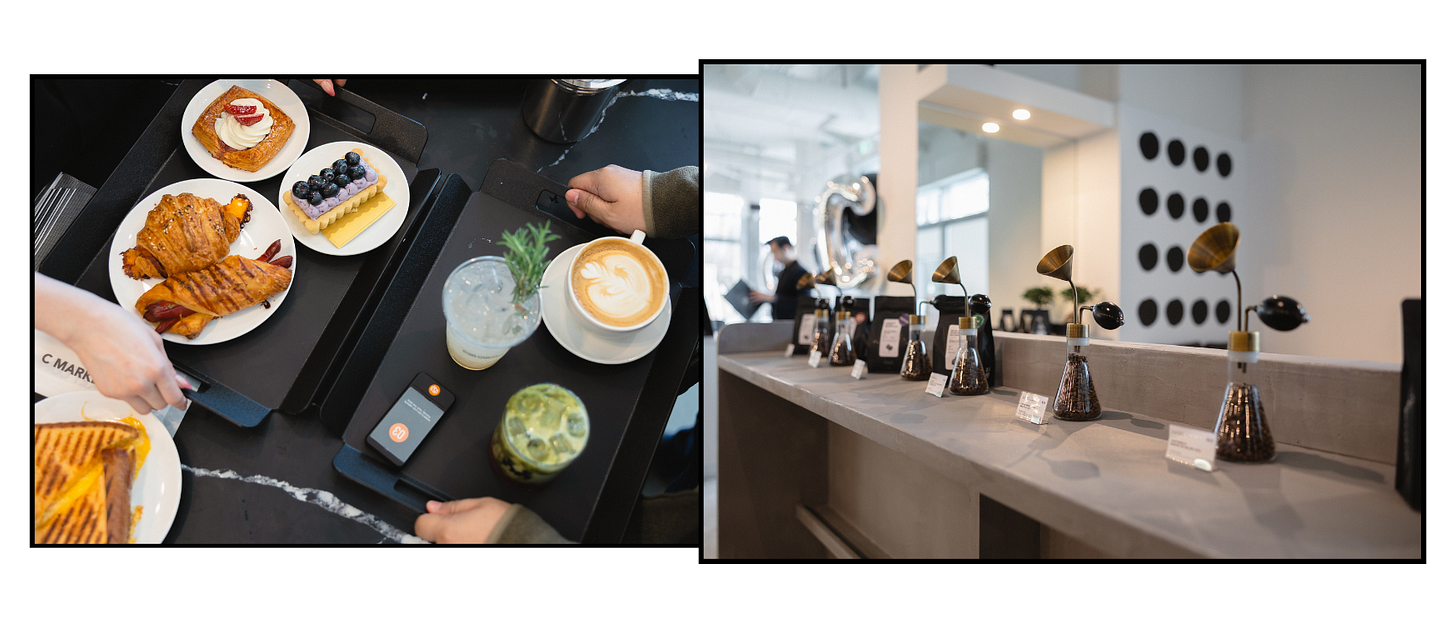
“You will never pay ten dollars for a five-hundred-dollar coffee, and you’re not going to taste the premium in a one-dollar coffee.”
What she’s building toward is what she calls affordable luxury; quality that doesn’t require an expert vocabulary to enjoy, priced so that showing up every day doesn’t feel like an indulgence. “Our five senses are smart. Once people start having a good cup of coffee every day, they can go up, but they can never go back down.”
She pushed further on why quality alone isn’t the hard part. What’s actually difficult, in her view, is educating customers on what they’re even looking at. She brought up green coffee grading as an example, like the AA and AB classifications used for Kenyan coffee, a distinction most drinkers never see.
Her comparison was fashion: some people want Hermès or Chanel, and that’s a real, valid price bracket, but there are also well-made products in the mid-range that never get equal credit simply because they’re not the luxury name. She wants C Market to occupy that mid-range with pride, not as a compromise. “So what are you trying to consume?” is the question she wants customers to sit with, rather than assuming price and prestige are the only signals of quality.
The Suburbs, COVID, and a Loss That Reframed Everything
C Market opened its first location in Coquitlam in early 2019. The first specialty coffee shop in the Tri-Cities area. Bridgette built it with a close friend, a Red Seal chef named Ru, who ran the food program while she focused on roasting, starting with a small 2-kilogram Diedrich roaster. “It was truly a collaboration between two specialists,” she said.
A year in, COVID hit. The café became a non-contact space, then one divided by acrylic panels between tables, very much the opposite of everything she’d built it to be. But the experience clarified something for her: people weren’t just missing coffee. They were missing being near each other.
In 2023, her cofounder and best friend, Ru, died of cancer…. Bridgette described it as a loss that shifted her entire perspective. A reminder that what actually matters is time, and who you spend it with. What started as a small suburban café was never really about the coffee but about giving people somewhere to be present with each other.
Building a Team, and a Franchise, Around Culture
C Market has grown steadily since: Port Coquitlam opened in 2022, Pitt Meadows in 2024, and in 2026 a new flagship on Main Street in Vancouver - now the largest café in the city. A few more locations are under negotiation, and the company recently scouted Edmonton as a possible first step into Alberta though, as Bridgette put it, “until it’s signed, it’s never signed.”
Several of her managers have been with the company since grade eleven and have since graduated university, working their way up alongside the business, something she counts among her proudest achievements.
That longevity coexists with a risk she was candid about: hiring young people. C Market has built a reputation as an educator in the space, so when a newer, high-school-age barista has an off day and draws a tough review, it stings more than it would for a shop without that reputation to protect. She isn’t especially afraid of it, though. As a mother herself, she sees giving younger people a real shot as part of the job, not a liability to manage around.
Her focus now sits squarely on quality control across locations and on training. “Delivering the same quality across multiple stores is the most challenging part. That’s why we now have a quality control team, and audits.” She’s building an internal training curriculum that goes beyond on-the-job experience into the theory behind the craft.
She named Starbucks specifically here as a model worth studying: a company that also started as one small coffee shop and built systems robust enough to carry quality across thousands of locations. She wants that same backbone at C Market, minus the parts of scale that flatten a brand’s identity.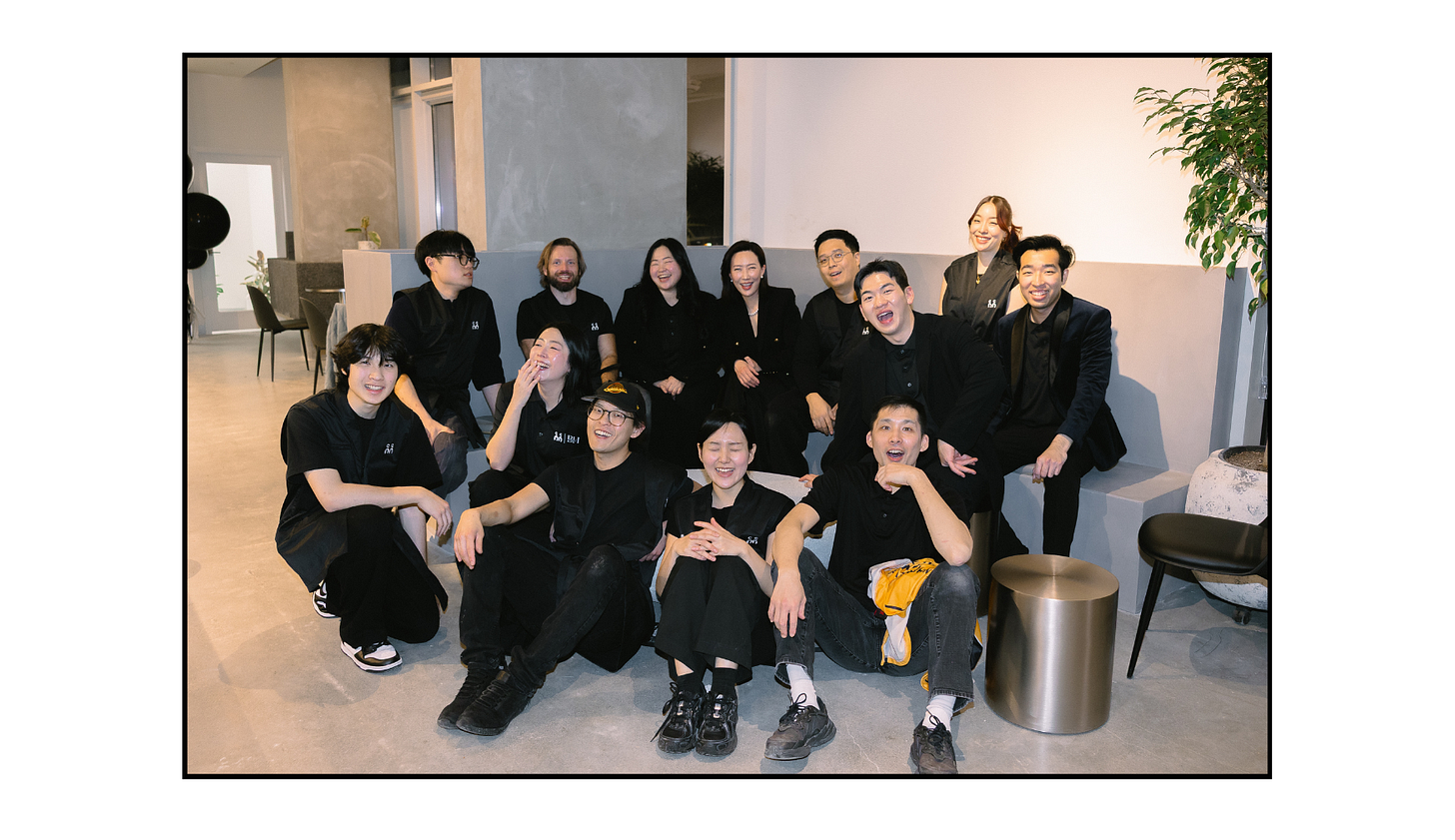
Franchising in specialty coffee is still rare, and Bridgette wants to be one of the people who makes it work. Korea, where she’s originally from, has one of the fastest-moving coffee cultures in the world. As an Asian female founder building in one of the world’s most multicultural countries, she sees that identity as an asset rather than something to smooth over. Her ambition is to bring Korea’s speed and creativity into the Canadian market without losing either identity in the process. Not a Korean coffee company, not a copy of whatever’s trending in Seoul or Tokyo, but something that translates.
That question crystallized for her on a recent trip to the Starbucks Reserve Roastery in Tokyo, which she named, with a slight laugh at how unoriginal it sounds, as the one café that has changed her most as a person.
She kept coming back to how the space was built around the season: a multi-floor building with a dedicated tea bar, different brewing methods laid out by section, and sakura-themed touches, small custom coasters and merchandise timed to cherry blossom season. “I was looking at what the customer’s experience was. How did they reach, what did they take home with them?”
She sees Asian and European café cultures doing that kind of seasonal storytelling and merchandising exceptionally well, and thinks Canadian cafés, hers included, still have room to grow there. It’s the layering she wants to bring to C Market filtered through, as she puts it, “a little sense of Canadian culture,” rather than imported wholesale.
The Number She’s Building Toward
Bridgette’s biggest business lessons since opening day made her reassess her goals, and she’s settled on a ceiling: fifty stores, not more.
“Some founders dream of a hundred or two hundred. I don’t want to open too many, because each location has to be a destination.”
She wants people to associate the name with a specific place worth visiting, wherever in the city they happen to be, rather than a convenience they pass without noticing.
She doesn’t describe her role as CEO of a franchise so much as what she calls being a “coffee mom”; someone building a space where people, friends, and families can gather, feel unhurried, and share something good.
“We care deeply about quality, you could even call us coffee snobs. But for us, that level of quality isn’t the identity. It’s simply the baseline.”
Thank you to Bridgette for making the time. If you’re in Vancouver, C Market Coffee is worth the trip in from wherever you’re starting.
Business lessons from Bridgette,
1. Passion gets you in the door. The numbers keep you in the room. Bridgette started C Market purely on passion, sourcing the best ingredients she could without ever looking closely at cost. She doesn’t regret the instinct, but she’s clear that it isn’t sustainable on its own. “If we want to continue this amazing culture, we have to survive first.” Love the craft all you want, but the business still has to work as a business.
2. Price for value, not for markup. Her rule of thumb is to avoid stacking a heavy margin on top of what she’s selling while still keeping the product premium. She compared it to finding a gem in a vintage shop: something excellent, priced so it’s actually within reach. Customers can feel the difference between a fair price and an inflated one, even if they can’t always articulate why.
3. Systems and people are what let quality survive past one location. The hardest part of growing, in her experience, isn’t the first café. It’s delivering that same cup, that same feeling, at every location after it. That only happens with real training, real quality control, and a team that’s invested enough to stay and grow with the company.